


Key Highlights
- Agility footwork drills enhance athletes’ ability to change direction quickly while maintaining balance and control.
- Common agility drills include foot fire exercises and ladder drills, aimed at improving speed, coordination, and reaction time.
- Traditional movement techniques focus on balance, positioning, and timing, essential for executing offensive and defensive moves in sports.
- Integrating agility drills with traditional techniques can significantly improve overall athletic performance and responsiveness.
- Agility drills improve speed and quickness, allowing athletes to react faster during competitions.
- Coordination training enhances cognitive function, enabling better decision-making under pressure.
- Flexibility exercises associated with agility training reduce injury risks by strengthening muscles and joints.
- Traditional footwork techniques improve balance and stability, crucial for executing complex movements in sports like martial arts.
- Spatial awareness and positioning gained from traditional techniques are vital in sports such as basketball and boxing.
- The effectiveness of agility drills varies by sport, being more beneficial in fast-paced games like soccer and basketball.
- Combining agility drills with traditional techniques generally leads to better outcomes for athletes, tailored to their specific sport needs.
Introduction
Sports training is always changing, and athletes are looking for every advantage to boost their performance. Among the many training techniques, the debate between agility footwork drills and traditional movement methods stands out. Each has its own benefits tailored to specific sports.
- Agility drills can increase speed and quickness,
- Traditional techniques focus on balance and positioning-two key elements that can make or break an athlete’s game.
So, how can athletes blend these different approaches to reach their full potential and perform at their best?
Define Agility Footwork Drills and Traditional Techniques
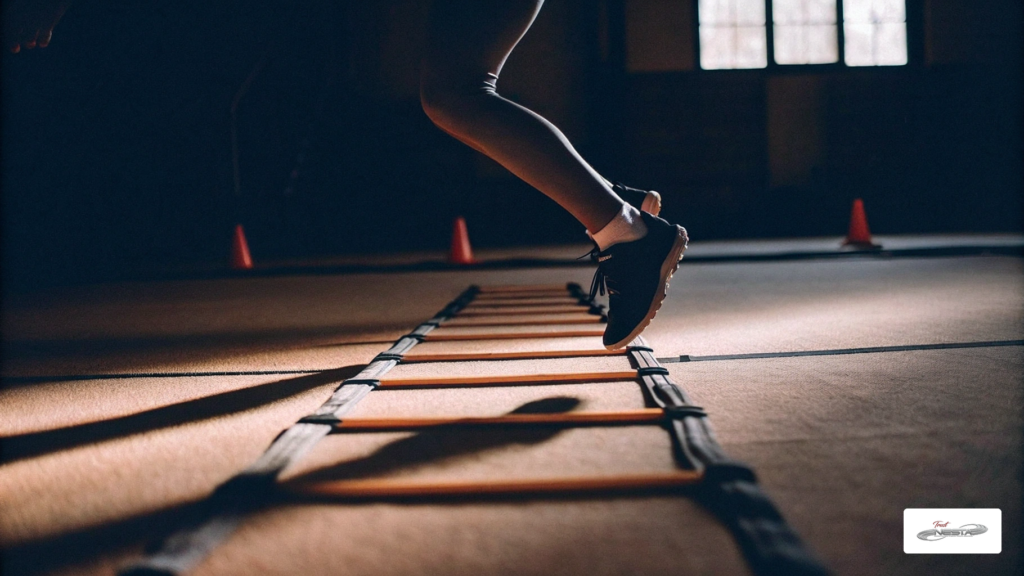
are focused exercises that help athletes change direction quickly and efficiently while maintaining their . These exercises often use equipment like , aiming to boost . Examples include the foot fire drill and various ladder drills, which emphasize fast foot movements and .
On the other hand, cover the basic actions used in many sports, especially in martial arts, basketball, and football. These techniques focus on , allowing athletes to perform with precision. Key actions like shuffling, pivoting, and to these conventional techniques, helping players maintain control during games.
By integrating with traditional methods in training routines, athletes can significantly , quickness, and responsiveness on the field.
Evaluate Benefits of Agility Footwork Drills
that can significantly enhance athletic performance. First off, agility footwork drills , helping athletes react faster during competitions. For example, are designed to enhance foot speed and coordination, which are crucial for sports that need quick changes in direction.
Plus, helps the brain grow by training it to process information quickly and respond to stimuli, especially in high-pressure situations. Research shows that athletes who do make better decisions on the field, which improves their overall game.
On top of performance benefits, . By strengthening the muscles and joints used in quick movements, these exercises lower the risk of strains and sprains. A study found that people who engaged in flexibility training saw significant improvements in their VO2 max and athletic movement after just six weeks, proving how effective these exercises can be.
Adding agility footwork drills to training routines not only boosts athletic performance but also enhances cognitive function and reduces injury risks. This makes them a .
Assess Advantages of Traditional Footwork Techniques
offer key benefits that are vital for athletes in various sports. One major advantage is improved balance and stability, which are essential for executing complex movements effectively. In martial arts, for instance, that focus on help practitioners maintain their center of gravity while delivering strikes or dodging attacks, keeping them agile and composed under pressure.
These techniques also boost , helping athletes manage the distance between themselves and their opponents. This is especially important in sports like basketball and boxing, where can significantly affect the outcome of a play or match. As coach Mike Lee puts it, ‘.’
for more advanced movements. By mastering basic movement techniques, athletes can build on these skills to improve their overall performance. Research shows that athletes who practice conventional movement exercises experience a noticeable boost in spatial awareness, leading to better decision-making and quicker responses during competition. A case study on the ‘Significance of Movement Techniques in Defensive Backs’ highlights that effective training in these techniques enhances , allowing athletes to cover more ground with less effort.
In summary, while speed and quickness are often highlighted in training, provide the essential foundation for efficient motion in competitive sports, helping to develop a well-rounded athletic skill set. As coaches emphasize, “Get your feet right, and the rest of your game will rise with it.
Compare Effectiveness in Various Sports Contexts
The effectiveness of can vary greatly depending on the sport. In games like soccer and basketball, where are key, are particularly effective. For example, agility footwork drills can help players weave through defenders and .
On the flip side, are crucial in sports like boxing and martial arts, where matter for both offense and defense. Moves like pivoting and lateral movement allow athletes to dodge attacks while setting up for counter-strikes.
In team sports, often leads to the best outcomes. Athletes can with agility drills while also mastering traditional techniques to enhance their overall movement. Ultimately, the decision regarding should be based on the and the .
Conclusion
Exploring agility footwork drills alongside traditional techniques shows just how important both are for boosting athletic performance. Agility drills sharpen speed, quickness, and cognitive responsiveness, while traditional techniques lay down the essential skills for effective movement in sports. By blending these methods, athletes can build a well-rounded training plan that truly maximizes their potential on the field or court.
Key insights reveal that agility footwork drills can greatly enhance reaction times and coordination, which are crucial in fast-paced sports like basketball and soccer. On the flip side, traditional techniques focus on balance, positioning, and spatial awareness – key elements for success in martial arts and boxing. Combining these approaches not only elevates athletic performance but also helps reduce injury risks, making them vital parts of any solid training program.
Ultimately, the decision between agility footwork drills and traditional techniques should depend on the specific needs of the sport and the individual athlete’s goals. Embracing a well-rounded approach that includes both training styles can lead to better performance, increased agility, and a comprehensive athletic skill set. Athletes and coaches are encouraged to assess their training strategies and think about how these insights can take their game to the next level.
Frequently Asked Questions
What are agility footwork drills?
Agility footwork drills are focused exercises designed to help athletes change direction quickly and efficiently while maintaining balance and control.
What equipment is commonly used in agility footwork drills?
Common equipment includes agility ladders, cones, and hurdles.
What are some examples of agility footwork drills?
Examples include the foot fire drill and various ladder drills, which emphasize fast foot movements and quick directional shifts.
How do traditional movement techniques differ from agility footwork drills?
Traditional movement techniques focus on basic actions used in sports, emphasizing balance, positioning, and timing for offensive and defensive moves, while agility drills specifically target quick directional changes.
What key actions are involved in traditional movement techniques?
Key actions include shuffling, pivoting, and lateral steps, which help athletes maintain control during games.
How can integrating agility footwork drills with traditional techniques benefit athletes?
Combining these training methods can significantly enhance an athlete’s overall performance, quickness, and responsiveness on the field.