

100% Online Training
Earn Your Biomechanics Certification

Comprehensive Training
Certified Biomechanics Specialist
Ongoing Support
Become a Top Fitness Professional with Advanced Biomechanics Training
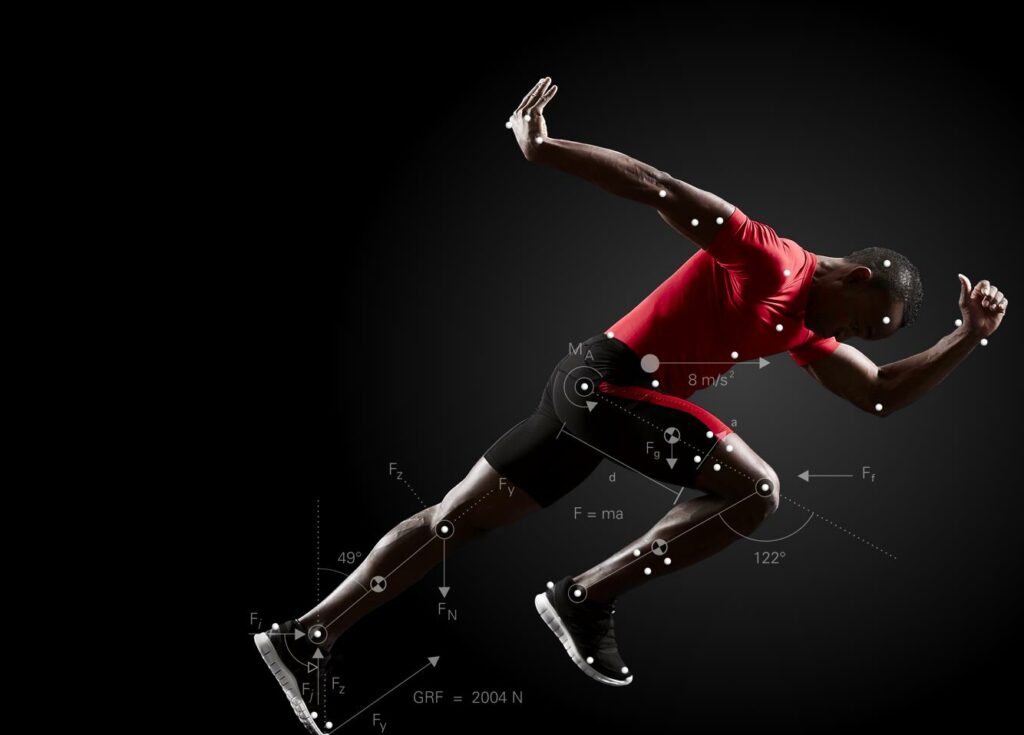
Are you a fitness professional looking to elevate your expertise and become a highly respected authority? Study and apply the science that powers human movement with our comprehensive online biomechanics certification course. Mastering biomechanics, the study of kinesiology, human movement, and joint function, is essential for building a successful career in strength and conditioning, injury prevention, and athletic training.
BIOMECHANICS SPECIALIST
$497
- 100% online training
- Immediate access to 14+ hours of online training
- In-depth video lessons
- 6 Online assesment quizzes
- 1 Final certificate online exam
- Printable digital study guide and workbook(s)
- Flexible self-study
- Receive digital certificate upon passing the finial exam
- Paper certificate with official seal mailed within North America 2-3 weeks upon verification (additional certificate shipping fees may apply see below)
- Lifetime certificate
- Lifetime access to online training
What You Will Learn:
Biomechanical Principles: Understand the core concepts of biomechanics, including kinematics and kinetics, and how they relate to human movement.
Force Analysis: Learn to identify and analyze internal and external forces acting on the body, and their effects on movement and performance.
Joint Structure and Function: Gain insights into joint mechanics and how proper loading can prevent injuries and optimize muscle function.
Adaptation to Exercise: Explore how the body adapts to physical stress and the principles of general adaptation syndrome (GAS) and specific adaptations to imposed demands (SAID).
How You'll Apply It:
Training Optimization: Use biomechanical principles to design effective training programs tailored to individual needs, maximizing performance and minimizing injury risks.
Technique Improvement: Enhance exercise techniques through detailed biomechanical analysis, ensuring safe and efficient movement patterns.
Performance Enhancement: Apply your knowledge to improve athletic performance by optimizing movement and reducing drag forces.
Join us in this journey to unlock the secrets of biomechanics and take your training and coaching skills to the next level. Enroll now and start seeing human movement in a whole new light!
Why is this knowledge vital for those entering the fitness industry?
Learning functional biomechanics will help clients achieve better outcomes by enabling trainers and coaches to apply biomechanical principles effectively in their training programs. This knowledge allows for:
- Optimized Program Design: Trainers can analyze individual needs and optimize exercise techniques and program designs to maximize performance and minimize injury risks.
- Improved Technique: Understanding biomechanics helps in refining exercise techniques, ensuring movements are performed safely and efficiently, which reduces the likelihood of injuries.
- Enhanced Performance: By understanding the forces and movements involved, trainers can help clients improve their performance through better technique and targeted training.
- Injury Prevention: Proper loading of joints and muscles based on biomechanical principles helps prevent injuries by ensuring that exercises are performed in a way that aligns with the body’s natural structure and function.
- Effective Adaptation: Knowledge of how the body adapts to mechanical stress allows trainers to design programs that promote positive physiological adaptations, leading to improved strength, endurance, and overall fitness.
Overall, learning functional biomechanics equips trainers with the tools to create personalized, effective, and safe training programs that cater to the specific needs and goals of their clients.

❝Becoming a NESTA Certified Biomechanics Specialist gave my career a huge boost. People now respect my knowledge and are excited about their results.
Phil N.
Course Outline: Biomechanics Certification
Introduction to Biomechanics
- Lecture 1.1: What is Biomechanics?
- Definition and importance of biomechanics
- Objectives of the course
- Overview of biomechanical principles
- Application in exercise science and human movement
Basic Principles in Mechanics
- Lecture 1.2: Fundamental Units in Mechanics
- Qualitative vs. Quantitative measurements
- Statics and dynamics
- Kinematics and kinetics
- Scalars and vectors
- Structure and function
Forces and Their Effects
- Lecture 2.1: Understanding Forces
- Internal vs. external forces
- Muscle activation and connective tissue
- Gravity and body weight
- Fluid drag resistance and elastics
Joint Structure and Function
- Lecture 3.1: Joint Mechanics
- Joint structure and function
- Proper loading of joints
- Muscle firing and joint movement
- Injury prevention through joint optimization
Adaptation to Exercise
- Lecture 4.1: General Adaptation Syndrome (GAS)
- Stress and adaptation
- Alarm, resistance, and exhaustion stages
- Optimal training and recovery
- Overtraining and detraining
Biomechanical Analysis
- Lecture 5.1: Analyzing Human Movement
- Kinematic and kinetic analysis
- Describing motion and forces
- Practical applications in training and technique improvement
Practical Applications in Training
- Lecture 6.1: Optimizing Training Programs
- Applying biomechanical principles to program design
- Specific adaptations to imposed demands (SAID)
- Specificity and transfer in training
- Enhancing performance and minimizing injury
Advanced Topics in Biomechanics
- Lecture 7.1: Structural and Functional Adaptations
- Hypertrophy and atrophy
- Neuromuscular effects
- Wolf’s Law and Davis’s Law
- Practical examples and case studies
Integrating Biomechanics into Practice
- Lecture 8.1: Practical Integration
- Functional movement screens
- Postural and dynamic assessments
- Analyzing sport-specific demands
- Optimizing exercise techniques for individual clients
Conclusion and Future Directions
- Lecture 9.1: Summary and Next Steps
- Recap of key concepts
- Future trends in biomechanics
- Continuing education and professional development
- Final thoughts and course wrap-up
This comprehensive course outline ensures that you will gain a deep understanding of biomechanics and its practical applications, empowering you to enhance your skills as a personal trainer and deliver exceptional results for your clients.
Sources of information:
- Biomechanics training material from NESTA (including some review material from the NESTA PFT)
- University level lectures in Advanced Anatomy and Kinesiology
- Applied Biomechanics from NESTA’s upcoming program EMIS (Exercise Mechanics Instructional Series)
Biomechanics Specialist Certificate Details
Prerequisites: Basic Anatomy Knowledge
Lifetime Certificate: Certificate does not expire
Learning Format: Learn on your schedule, train on any device using our digital training system including all training and progress tracking tools.
Assessments: 6 Practice Quizzes (optional, and you can take them as many times as you want)
(NOTE: The Final Exam will randomly draw from the SAME test question pool as the 6 Practice Quizzes)
Exam Requirements: Take the 100-question final exam, online, non-proctored exam. 70% is the passing score. (3 attempts) at your own pace. Know your results instantly!
Completion Time Recommendation: Complete final exam within one year of purchase.
Retest Fee: $95 retest fee applies if the passing requirement is not met at the end of the third exam attempt.
Earn the prestigious title of "Certified Biomechanics Specialist"
Pass your exam and instantly access your digital certificate!
Printed certificate available (shipping extra if living outside of North America).
Continuing Education Units: 4.0 NESTA CEUs, 1.9 NASM CEUs, 20 ISSA CECs, 2.0 Spencer Institute CEUs, 2.0 MMACA CEUs, 2.0 ITCA CEUs (enough for recertification with the NESTA Personal Fitness Trainer Certification)
Course FAQs
Functional Biomechanics is the study of human movement and the forces that affect it, focusing on practical applications to optimize performance and minimize injury.
This course is ideal for personal trainers, coaches, physical therapists, and anyone interested in understanding the mechanics of human movement to improve training outcomes.
You will learn about biomechanical principles, joint structure and function, forces and their effects, adaptation to exercise, and practical applications for optimizing training programs.
By understanding biomechanics, you can design more effective training programs, improve exercise techniques, prevent injuries, and enhance your clients’ performance.
No, the course is designed to be accessible to those without a strong background in physics or math. It focuses on practical applications and concepts rather than complex calculations.
Yes, the course includes practical applications, case studies, and examples to help you apply biomechanical principles in real-world training scenarios.
The course is divided into modules, each covering different aspects of biomechanics, from basic principles to advanced topics and practical integration into training.
What fitness professionals achieve with NESTA
"I am very satisfied with the course materials presented by NESTA for the personal training certification. I decided to pursue the certification for my own personal use and not necessarily as a working trainer. I love to compete in physique contests and am often asked questions about my lifestyle. I wanted to provide sound advice and learn further details pertaining to nutrition and exercise science for my own benefit. Thank you Nesta!"
"My name is Yvette, I re-certified my PFT Certification and am so extremely honored to continue being part of NESTA team! The staff (Suzan) has been AMAZING in assisting me with questions & or concerns. I will continue to proudly represent my NESTA education and values as a Personal Fitness Trainer & Coach. In good health,"
"Excellent program with up-to-date science. I would recommend it to anyone looking for an excellent fitness certification accepted everywhere."
"I loved the program. It made learning so interesting. My favorite part was watching the videos these really helped me absorb and remember the information. I highly recommend this program to help you pass the test."
Great course materials. Awesome C.E.U. courses. Very affordable. Great staff support. My go-to organization for current and pertinent health coach and personal fitness trainer information.