

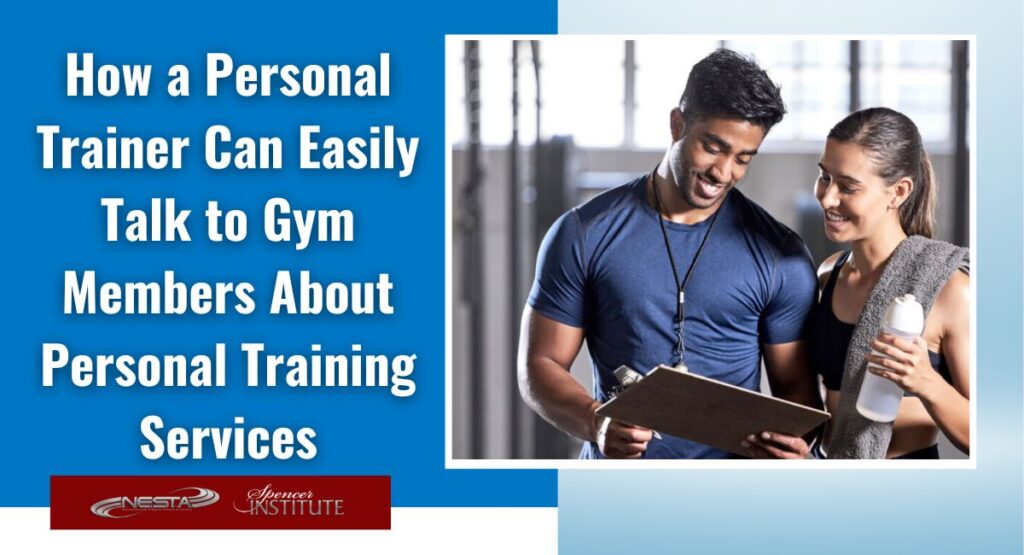
Once upon a time in a bustling city, there was a passionate personal trainer named Sarah. Sarah had a deep desire to help people transform their lives through fitness and wellness. However, she struggled with approaching members in the gym to offer her personal training services. She often felt nervous and unsure of how to initiate conversations. Determined to overcome her fear, Sarah decided to learn the art of approaching potential clients with confidence.
Real World Example 1 – The Friendly Greeting: Sarah began by offering a warm and genuine smile to every member she encountered. She realized that a simple “Hello” or “How’s your workout going today?” can break the ice and make her approachable. One day, while a woman was struggling with her form on the squat rack, Sarah approached her and kindly offered a tip to improve her technique. The woman appreciated Sarah’s help and eventually became one of her clients.
Real World Example 2 – Building Rapport: Sarah understood that building rapport was essential. She started by genuinely showing interest in the members’ progress and goals. She’d say things like, “I noticed you’ve been working hard. What are your fitness goals?” By actively listening to their responses, she could tailor her approach and demonstrate her dedication to their success.
Real World Example 3 – The Open-Ended Question: Sarah mastered the art of asking open-ended questions that encouraged members to share more about themselves. She’d inquire, “What motivated you to start coming to the gym?” or “What do you enjoy most about your workouts?” These questions sparked meaningful conversations and allowed her to offer her services organically.
As time passed, Sarah’s confidence grew, and her client base expanded. She transformed from a hesitant personal trainer to a confident and successful one. Her approach not only helped her gain clients but also created a supportive gym community where members felt valued and motivated.
The gym became a place of positive transformation, and Sarah’s journey inspired her to teach other personal trainers the art of approaching members with confidence and empathy. Together, they continued to change lives, one conversation at a time, reminding everyone that fitness was not just about physical strength but also about the strength of the human connection.
Open-ended Questions
Open-ended questions are powerful communication tools that encourage individuals to provide more elaborate and thoughtful responses. Unlike closed-ended questions that typically elicit a simple “yes” or “no” answer, open-ended questions invite people to share their thoughts, feelings, and experiences in greater detail. Personal trainers can effectively use open-ended questions to engage with gym members, understand their needs, and build rapport. Here are some key aspects of open-ended questions:
- Encouraging Engagement: Open-ended questions prompt conversation and encourage individuals to express themselves. They show that you are genuinely interested in what they have to say.
- Building Rapport: By allowing members to share their thoughts, open-ended questions create a sense of connection and trust. People are more likely to open up to someone who listens and values their input.
- Exploring Goals: Personal trainers can use open-ended questions to delve deeper into a member’s fitness goals. For example, instead of asking, “Do you want to lose weight?” they could ask, “What inspired you to start working toward your fitness goals?”
- Identifying Challenges: Open-ended questions help trainers identify any obstacles or challenges that members may be facing in their fitness journey. For instance, they can ask, “Can you tell me more about any previous experiences you’ve had with exercise programs?”
- Tailoring Workouts: Personalized training plans are more effective. Open-ended questions like, “What types of exercises do you enjoy the most?” can provide valuable insights into a member’s preferences.
- Assessing Progress: Trainers can gauge a member’s progress by asking open-ended questions like, “How do you feel about your fitness level compared to when you started?” This allows for a more in-depth evaluation.
- Empowering Decision-Making: Open-ended questions empower members to think critically about their fitness choices. For instance, trainers might ask, “What do you think are the best steps to achieve your fitness goals?”
- Enhancing Communication Skills: Personal trainers who use open-ended questions effectively demonstrate strong communication skills. This not only benefits their relationships with clients but also sets an example for healthy communication within the gym community.
- Promoting Self-Reflection: Open-ended questions encourage self-reflection. When asked about their fitness journey, members may uncover deeper motivations and reasons behind their goals.
- Adapting Training Plans: Trainers can adapt and modify training plans based on the information gathered through open-ended questions. For example, if a member expresses a desire to focus on endurance, the trainer can adjust the program accordingly.
Here are some examples of open-ended questions that personal trainers can use when engaging with gym members:
- “What inspired you to start your fitness journey?”
- “How do you envision your ideal fitness level?”
- “Can you describe any specific fitness accomplishments you’re aiming for?”
- “What do you enjoy most about your current workout routine?”
- “What are some challenges you’ve faced in maintaining a consistent fitness regimen?”
- “What motivates you to stay committed to your fitness goals?”
- “How would you like to feel physically and mentally as a result of your training?”
- “What aspects of your health and wellness are most important to you?”
- “What types of exercises or activities do you find the most enjoyable?”
- “How do you see fitness fitting into your overall lifestyle?”
By using open-ended questions effectively, personal trainers can foster more meaningful conversations, gain deeper insights into their clients’ needs, and provide tailored guidance that ultimately leads to better fitness outcomes.
Improve Your Communication Skills
Improving your communication skills is a valuable endeavor that can enhance various aspects of your personal and professional life. Effective communication is essential for building relationships, resolving conflicts, and achieving your goals. Here are some practical steps to help you improve your communication skills:
- Active Listening:
- Pay full attention to the speaker.
- Avoid interrupting or formulating your response while they are speaking.
- Use non-verbal cues like nodding to show that you are engaged.
- Reflect back on what you’ve heard to confirm your understanding.
- Non-Verbal Communication:
- Be aware of your body language, facial expressions, and tone of voice.
- Maintain eye contact without staring.
- Use gestures and facial expressions that complement your message.
- Ensure your non-verbal cues are congruent with your words.
- Clarity and Conciseness:
- Express your thoughts and ideas clearly and succinctly.
- Avoid using jargon or overly complex language.
- Organize your thoughts before speaking to stay on topic.
- Use examples and analogies to clarify your points.
- Empathy:
- Try to understand the emotions and perspectives of others.
- Show empathy by acknowledging their feelings and experiences.
- Use phrases like “I understand how you feel” or “That must be challenging.”
- Ask Open-Ended Questions:
- Encourage conversation by asking questions that require more than a yes/no answer.
- Use “what,” “how,” “why,” and “tell me more” to prompt discussion.
- Listen actively to the responses.
- Practice Active Speaking:
- Use “I” statements to express your thoughts and feelings.
- Avoid making assumptions about what others are thinking or feeling.
- Be assertive when expressing your needs and boundaries without being aggressive.
- Feedback and Self-Reflection:
- Seek feedback from others about your communication style.
- Reflect on past conversations and identify areas for improvement.
- Continuously work on refining your communication skills.
- Cultural Sensitivity:
- Be mindful of cultural differences in communication styles.
- Educate yourself about cultural norms and practices to avoid misunderstandings.
- Conflict Resolution:
- Learn effective conflict resolution techniques, such as active listening, compromise, and finding common ground.
- Stay calm and composed during conflicts to facilitate productive discussions.
- Presentation Skills:
- Improve your public speaking and presentation skills if necessary.
- Practice speaking in front of a mirror or recording yourself to identify areas for improvement.
- Join speaking clubs or classes to build confidence.
- Read Widely:
- Reading a variety of materials, from books to news articles, can expand your vocabulary and improve your communication skills.
- Exposure to different writing styles can also help you express your ideas more effectively.
- Seek Professional Development:
- Consider enrolling in communication skills workshops or courses.
- Many organizations offer training programs to enhance communication skills.
- Mentorship:
- Seek out mentors or coaches who can provide guidance and feedback on your communication skills.
- Learn from individuals who excel in communication.
- Practice, Practice, Practice:
- The more you practice effective communication, the better you’ll become.
- Engage in conversations with diverse groups of people to hone your skills.
- Be Patient with Yourself:
- Improvement takes time, so be patient and kind to yourself as you work on your communication skills.
- Celebrate small successes along the way.
Remember that effective communication is an ongoing process. By actively working on these strategies and seeking opportunities to practice and refine your skills, you can become a more confident and skilled communicator in both your personal and professional life.
How You Can Improve Empathy Skills
Improving empathy skills is a valuable endeavor that can lead to better relationships, enhanced communication, and a deeper understanding of others. Empathy involves recognizing and understanding the emotions and perspectives of others. Here are some practical steps to help you improve your empathy skills:
- Active Listening: Pay close attention when someone is speaking to you. Make a conscious effort to listen without interrupting or formulating your response. Focus on the speaker’s words, tone, and body language.
- Practice Presence: Be fully present in the moment during conversations. Minimize distractions and give your undivided attention to the person you’re interacting with.
- Maintain Eye Contact: Maintain appropriate eye contact to convey your engagement and interest in the conversation. Avoid staring, but also avoid looking away excessively.
- Use Open-Ended Questions: Encourage others to share their thoughts and feelings by asking open-ended questions. These questions prompt more in-depth responses and show that you are interested in their perspective.
- Reflect on Feelings: Try to identify and understand the emotions that the other person is experiencing. Consider what might be causing those emotions and how the person might be affected by them.
- Validate Emotions: Acknowledge the other person’s feelings and experiences. Use phrases like “I understand how you feel” or “It’s okay to feel that way.”
- Avoid Making Assumptions: Resist the temptation to make assumptions about what others are thinking or feeling. Instead, ask clarifying questions to gain a clearer understanding.
- Practice Perspective-Taking: Imagine yourself in the other person’s shoes. Consider how you might feel and react if you were in their situation. This helps you gain insight into their perspective.
- Be Patient: Empathetic listening may require patience, especially when dealing with complex emotions or difficult conversations. Avoid rushing to conclusions or offering quick solutions.
- Avoid Judgment: Suspend judgment and avoid criticizing or evaluating the other person’s feelings or experiences. Remember that empathy involves understanding, not necessarily agreeing with, their perspective.
- Learn About Different Perspectives: Educate yourself about different cultural, social, and individual perspectives. Understanding diverse viewpoints can enhance your empathy for people from various backgrounds.
- Practice Self-Compassion: Developing empathy for others can be easier when you practice self-compassion. Be kind and understanding toward yourself, as this can translate into increased empathy for others.
- Read Empathetic Literature: Read books, articles, or stories that focus on empathy and human experiences. This can help you gain insights into the thoughts and emotions of others.
- Seek Feedback: Ask for feedback from friends, family, or colleagues on your empathy skills. They may provide valuable insights and suggestions for improvement.
- Empathize with Positive Emotions: While empathy often involves understanding negative emotions, practice empathizing with positive emotions as well. Celebrate others’ joys and successes.
- Volunteer and Help Others: Engage in volunteer work or activities that allow you to help others. This can provide real-world opportunities to practice empathy.
- Keep a Journal: Consider keeping a journal where you reflect on your interactions and the empathy you’ve shown. This self-reflection can help you track your progress.
Remember that developing empathy is an ongoing process, and it may require patience and effort. By actively practicing these steps and being mindful of your interactions with others, you can cultivate and enhance your empathy skills, leading to more meaningful and compassionate relationships.