

Key Highlights
- Adductor foam rolling enhances athletic performance and recovery by improving flexibility, decreasing discomfort, and preventing injuries.
- Regular foam rolling increases hip joint range of motion, making movements like squats and lunges easier.
- Self-myofascial release reduces delayed-onset muscle soreness (DOMS), aiding faster recovery post-workout.
- Foam rolling promotes better blood circulation, essential for muscle healing and overall athletic performance.
- To effectively foam roll, gather tools like a foam roller, yoga mat, and comfortable clothing, and find a quiet space for practise.
- Follow a step-by-step technique: start position, leg positioning, rolling technique, finding tender spots, and frequency of use.
- Avoid common mistakes such as rolling over injuries, rushing through the process, and neglecting proper form.
- Encourage deep breathing during foam rolling to enhance muscle release and regulate the nervous system.
Introduction
Inner thighs often carry the weight of tightness and tension, which can hold back athletic performance and recovery. But what if there was a way to transform that struggle into strength? Understanding the incredible benefits of adductor foam rolling can empower trainers to elevate their clients’ fitness journeys. Yet, the question lingers: how can one truly master this technique to enhance flexibility, ease discomfort, and prevent injuries? This guide takes you through the essential steps and insights needed to unlock the full potential of adductor foam rolling, equipping trainers to inspire their clients toward peak performance. Together, let’s embark on this journey of growth and achievement.
Understand the Benefits of Adductor Foam Rolling
The adductor foam roll therapy for the muscles nestled on the inner thigh opens the door to a world of benefits that can significantly elevate athletic performance and recovery. Imagine stepping onto the field or into the gym, feeling more agile and ready to conquer your goals. Here’s how foam rolling can be your ally on this journey:
- Improved Flexibility: Picture yourself executing squats and lunges with ease, your body moving fluidly. Regular foam rolling can enhance your hip joint’s range of motion, making those movements not just possible but effortless. Studies reveal that when you combine soft tissue manipulation with static stretching, you can achieve remarkable flexibility gains, particularly in the hamstrings. This insight is echoed in , which underscores .
- : After a grueling workout, the last thing you want is to be sidelined by soreness. Engaging in can be your secret weapon against tension and discomfort. Research shows that a textured roller can significantly reduce delayed-onset muscle soreness (DOMS), allowing you to bounce back faster and get back to your training routine. This aligns perfectly with the course’s focus on adapting to exercise and .
- : Imagine the rush of fresh blood flowing through your muscles, delivering essential nutrients and speeding up recovery. The pressure from a foam roller stimulates blood flow, enhancing your body’s ability to heal. Studies have shown that using a soft cylinder can improve arterial stiffness and vascular function, both crucial for recovery and performance. NESTA’s training optimization principles highlight how vital blood flow is for athletic success.
- : Think about the freedom of movement without the fear of injury. By relieving tension in the adductors, an adductor foam roll can help you sidestep injuries caused by tightness and imbalances in the lower body. Maintaining flexibility and proper tissue function through is essential for reducing the risk of strains and injuries, ensuring you can move confidently. This principle is a cornerstone of NESTA’s biomechanics course, which empowers trainers to craft effective programs that prioritize .
, available for $497, offers . With in-depth video lessons, six online assessment quizzes, and a final certificate exam, you’ll be equipped to elevate your expertise. Upon passing, you’ll receive a digital certificate and a paper certificate with an official seal, mailed within North America in just 2-3 weeks (additional shipping fees may apply). With lifetime access to this invaluable training, you can continuously expand your knowledge and skills. Understanding these advantages allows trainers to seamlessly integrate into their clients’ fitness journeys, while leveraging the advanced insights gained from NESTA’s biomechanics education. Embrace this opportunity to inspire and uplift others on their path to greatness!

Gather Required Tools and Prepare for the Exercise
To effectively foam roll the adductor muscles, aspiring trainers need to gather a few that will set them on the path to success:
- : A standard will do the trick, but if you’re looking to elevate your practice, consider a textured roller for deeper tissue release. It’s all about finding what works best for you!
- Yoga Mat: A mat isn’t just a luxury; it provides the cushioning and stability you need during your exercises, allowing you to focus on your technique without distractions.
- : Dress in clothing that allows for easy movement and gives you access to your inner thigh area. Comfort is key when you’re on this journey.
Preparation Steps:
- : Seek out a flat, open area where you can lie down comfortably and move freely. This is your sanctuary, a place to focus on your growth.
- : Engage in gentle dynamic stretching or a short warm-up. This isn’t just a step; it’s a vital part of preparing your muscles for the roller, setting the stage for success.
- Position the Roller: Place the roller on the ground, ensuring it’s clean and free of obstructions. This simple act symbolizes your commitment to your practice.
By assembling these and creating a supportive environment, you’re not just preparing for foam rolling; you’re laying the groundwork for a in your training career. Embrace this moment, and let it inspire you to push through challenges and achieve your goals!

Follow Step-by-Step Instructions for Effective Foam Rolling
To effectively while applying biomechanical principles for , follow these empowering steps:
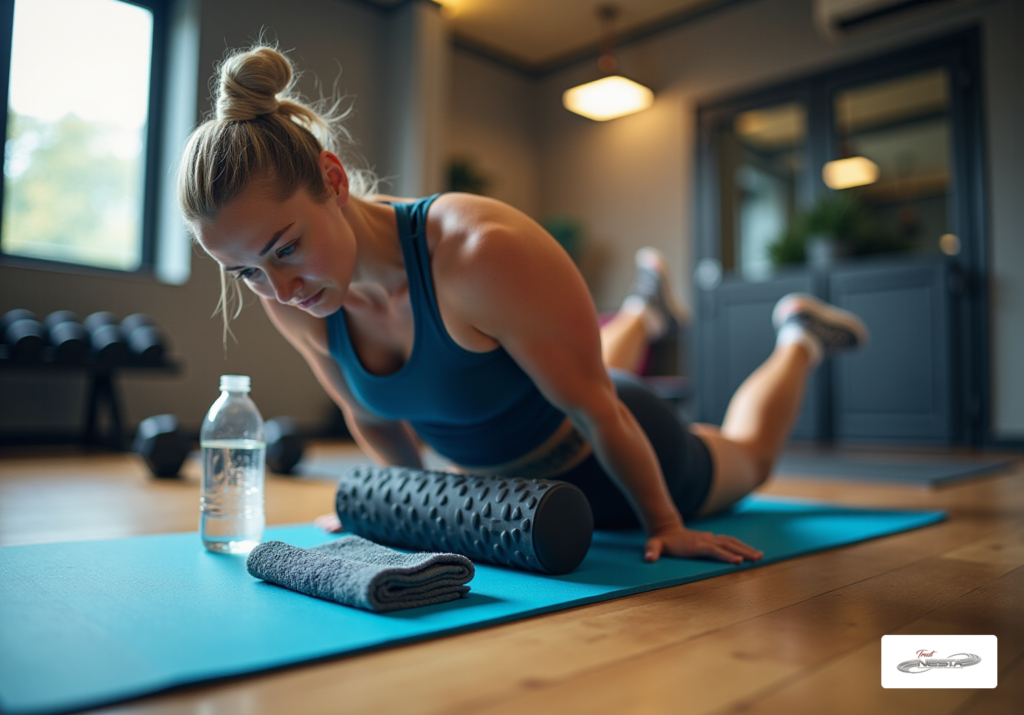
- Start Position: Begin by lying face down on a yoga mat, placing the roller under one inner thigh. This is your moment to connect with your body and set the stage for transformation.
- Leg Positioning: Bend the knee of the leg resting on the roller while extending the other leg straight behind you. Feel the stretch and embrace the journey ahead.
- Rolling Technique:
- Gradually roll your body over the foam roller, moving from the groin area down to the knee.
- Use your forearms for upper body support and to control the pressure applied, ensuring that you maintain proper joint mechanics throughout the movement. This is where you take charge of your body’s well-being.
- Find Tender Spots: As you roll, pause on any tender areas you discover. Hold this position for 30-90 seconds to promote relaxation of the tissues. Remember, easing into painful spots by starting in the areas around them can help. Nicole Davis, a , emphasizes that sensitivity should decrease fairly quickly. This method not only enhances performance but also reduces the chance of injury by encouraging and aligning with the . Think of it as nurturing your body back to its best self.
- Switch Legs: After completing one leg, switch to the other and repeat the process. Each side deserves your attention and care.
- Frequency: Aim to use a roller on your adductors 2-3 times a week, especially after workouts or on rest days. Davis recommends completing this routine three times per week for optimal benefits. Consistency is key on your path to greatness.
By following these guidelines, trainers can assist their clients in executing self-massage accurately and efficiently, . Including can help unlock the body’s complete potential and enhance overall physical wellness. This journey ultimately aligns with the principles of specific adaptations to imposed demands (SAID) in training, reminding us that every effort brings us closer to our goals.

Avoid Common Mistakes and Apply Pro Tips for Success
To truly harness the power of foam rolling and , let’s explore some empowering tips that can elevate your practice:
- Steer Clear of Injuries: It’s vital to or inflamed areas. Doing so can intensify pain and lead to further complications. Remember, your body deserves care and respect.
- Embrace Control in Your Speed: Roll slowly and with intention. Rushing through can diminish the effectiveness of your pressure application and increase discomfort. Take your time to gently work back and forth over sensitive areas; this mindful approach can yield remarkable results.
- Zero in on Tender Areas: , but keep it to about 20 seconds in one area to prevent bruising and irritation. This strategy allows for without overwhelming your tissues, paving the way for recovery.
- : Ensure your body is aligned and supported as you move. This prevents strain on other areas and promotes a safe practice. If fatigue creeps in, don’t hesitate to take a break; your well-being is paramount.
- : Encourage your clients to and relax during the technique. This not only enhances muscle release but also helps regulate the nervous system, steering it away from a fight-or-flight response.
By embracing these pro tips, trainers can guide their clients toward achieving remarkable results and enjoying a more fulfilling foam rolling experience. This journey not only enhances recovery but also contributes to overall well-being, inspiring both trainers and clients to reach new heights together.

Conclusion
Mastering the art of adductor foam rolling is more than just a skill; it’s a journey that empowers trainers to elevate their clients’ athletic performance and recovery. By weaving foam rolling into training routines, trainers can tap into a wealth of benefits—improved flexibility, reduced discomfort, enhanced blood circulation, and effective injury prevention. This practice not only nurtures physical well-being but also deepens the bond between trainers and their clients, paving the way for remarkable achievements together.
In this guide, we’ve uncovered essential insights, from the right tools to step-by-step rolling techniques and common pitfalls to sidestep. By embracing a mindful approach to foam rolling, trainers and clients alike can unlock its full potential. Committing to regular sessions and applying the recommended techniques allows trainers to facilitate a more profound recovery process while championing overall physical health.
Incorporating adductor foam rolling into fitness routines isn’t merely a suggestion; it’s an invitation to elevate the training experience. As trainers adopt these techniques and share their wisdom, they inspire clients to take charge of their recovery and performance. Remember, the journey to greatness is a shared one—equip yourself with the tools and insights to guide others toward achieving their best selves.
Frequently Asked Questions
What is adductor foam rolling and what benefits does it provide?
Adductor foam rolling is a self-myofascial release technique targeting the inner thigh muscles. It offers benefits such as improved flexibility, decreased discomfort, enhanced blood circulation, and injury prevention, all of which can elevate athletic performance and recovery.
How does foam rolling improve flexibility?
Foam rolling enhances the hip joint’s range of motion, allowing for smoother execution of movements like squats and lunges. Combining foam rolling with static stretching can lead to significant flexibility gains, particularly in the hamstrings.
Can foam rolling help reduce post-workout soreness?
Yes, engaging in foam rolling can significantly decrease delayed-onset muscle soreness (DOMS), helping athletes recover faster and return to their training routines.
How does foam rolling affect blood circulation?
The pressure applied during foam rolling stimulates blood flow to the muscles, delivering essential nutrients and speeding up recovery. It has been shown to improve arterial stiffness and vascular function, which are important for overall performance and recovery.
How does foam rolling contribute to injury prevention?
By relieving tension in the adductors, foam rolling helps prevent injuries caused by tightness and imbalances in the lower body. Maintaining flexibility and proper tissue function through this technique is crucial for reducing the risk of strains and injuries.
What is NESTA’s online biomechanics course, and what does it offer?
NESTA’s online biomechanics course is a comprehensive training program priced at $497, providing over 14 hours of video lessons, quizzes, and a final certificate exam. Participants gain lifetime access to the material and receive a digital certificate upon completion, along with a paper certificate mailed within North America.
How can trainers integrate myofascial release into their clients’ fitness programs?
Understanding the benefits of myofascial release, as taught in NESTA’s biomechanics course, allows trainers to effectively incorporate foam rolling into their clients’ fitness journeys, enhancing recovery and performance outcomes.
List of Sources
- Understand the Benefits of Adductor Foam Rolling
- Is Foam Rolling Effective? Science-Backed Benefits for Recovery and Mobility (https://signos.com/blog/is-foam-rolling-effective)
- 5 Scientifically-Backed Benefits of Foam Rolling (https://atlanticspineclinic.com/chiropractic-blog/343/5+Scientifically+Backed+Benefits+of+Foam+Rolling)
- Benefits and Risks of Foam Rolling (https://nmkishhwc.com/blog/benefits-and-risks-of-foam-rolling)
- Frontiers | A Comparison of the Effects of Foam Rolling and Stretching on Physical Performance. A Systematic Review and Meta-Analysis (https://frontiersin.org/journals/physiology/articles/10.3389/fphys.2021.720531/full)
- Blog 1 | American Hip Institute & Orthopedic Specialists Chicago IL (https://benjamindombmd.com/blog/benefits-of-foam-rolling-for-athletes?bp=6751)
- Gather Required Tools and Prepare for the Exercise
- Foam Rolling Guide 2025: Benefits, How To, and Best Foam Rollers for R (https://sunnyhealthfitness.com/blogs/health-wellness/foam-rolling-guide-2025-benefits-how-to-and-best-foam-rollers-for-recovery?srsltid=AfmBOoqciFwo0C2pS3tUCHBBOGK58RPD_f5sHHUFjxVTF8TYpj6yhkZd)
- Foam roller: Could you benefit from this massage tool? – Harvard Health (https://health.harvard.edu/exercise-and-fitness/foam-roller-could-you-benefit-from-this-massage-tool)
- Peloton’s 5 Favorite Foam Roller Exercises | Peloton (https://onepeloton.com/blog/foam-rolling-tips)
- Mobility tools: A guide to foam rolling | GOWOD (https://gowod.app/blog/mobility-tools-a-guide-to-foam-rolling)
- A survey of sports and rehabilitation professionals on foam rolling applications, contraindications, and adverse events – does the science reach professionals’ perceptions? – PMC (https://pmc.ncbi.nlm.nih.gov/articles/PMC12441024)
- Follow Step-by-Step Instructions for Effective Foam Rolling
- A guide to using a foam roller (https://running-physio.com/foamroller)
- fitbod.me (https://fitbod.me/exercises/foam-roll-hip-adductors)
- healthline.com (https://healthline.com/health/fitness-exercise/foam-rolling-how-to)
- Best Practices for Foam Rolling (https://americansportandfitness.com/blogs/fitness-blog/best-practices-for-foam-rolling?srsltid=AfmBOoo6mGO9RAnQ6d921Ybwheqfd7RJfpEVeUlR5AMdglJL_hN2EZ1d)
- Avoid Common Mistakes and Apply Pro Tips for Success
- In the News: 6 Foam Rolling Mistakes — Jonathan Jordan Fitness (https://jj-fit.com/blog/foammistakes)
- 5 Common Mistakes Runners Should Avoid When Foam Rolling (https://run.outsideonline.com/training/injuries-and-prevention/5-common-mistakes-runners-should-avoid-when-foam-rolling)
- The 4 Mistakes You’re Making When Foam Rolling (and How to Fix Them) – Runners Connect (https://runnersconnect.net/foam-rolling-for-runners-mistakes)
- 7 Foam Rolling Mistakes You Should Avoid (https://self.com/story/foam-rolling-mistakes-you-should-avoid)