


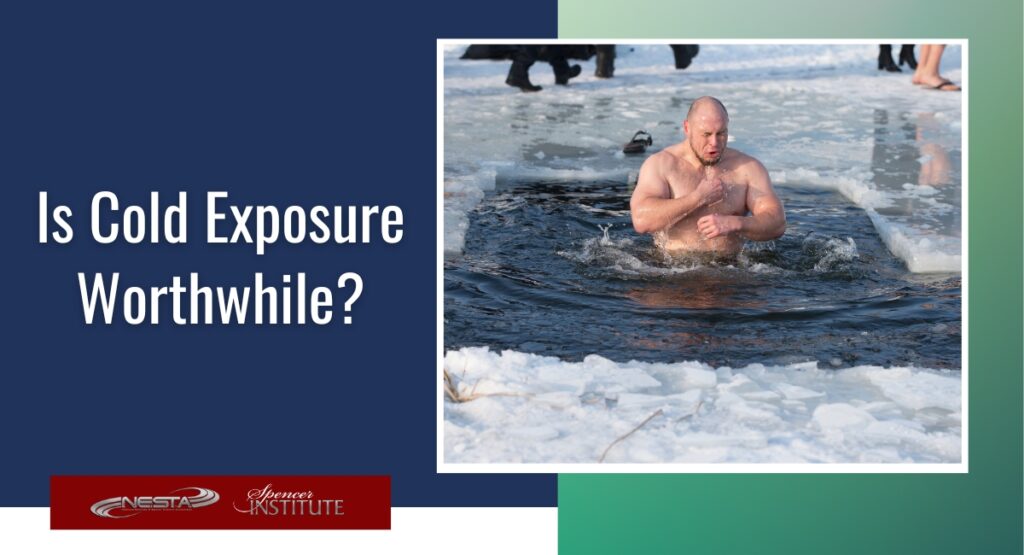

What are the Scientific Benefits of Cold Therapy?
As a health coach, wellness consultant, personal trainer, or sports conditioning expert, you’ll have surely heard of individuals including cold plunges and deliberate cold exposure to their routine. If you look in many places on social media, you will see that UFC fighters, working in concert with air conditioning coaches, will use cold plunges as part of their weekly recovery process after multiple strenuous workouts. There is still some confusion among health and fitness professionals, medical experts and even the consumer as to what are the exact health benefits, what is the most effective protocol, and what is pseudoscience versus hard science. Let’s take a moment to discuss what we know at this point.
Deliberate cold exposure has gained popularity in recent years as a form of therapy for various health benefits. The practice involves intentionally exposing oneself to cold temperatures, either through outdoor activities, cold showers, or cold plunges.
The History of Cold Therapy
The practice of deliberate cold exposure dates back to ancient times when people used ice and cold water for therapeutic purposes. In Ancient Greece, Hippocrates, the father of modern medicine, used cold water to treat various ailments, including fever and inflammation. Similarly, the Roman physician Galen recommended cold water as a remedy for various health conditions.
The practice of cold therapy continued through the Middle Ages when ice was used to numb pain during surgical procedures. The use of ice and cold water as therapeutic treatments became popular during the 19th century when hydrotherapy became a common treatment for various medical conditions.
During the early 20th century, a Russian physician named Dr. Tatyana Osipova developed a technique known as “cold training.” Dr. Osipova observed that the Siberian people, who were exposed to cold temperatures, had robust health and vitality. She developed a method of exposing the body to cold temperatures to promote health and wellness. Her method involved gradually increasing the duration of exposure to cold temperatures until the body adapted to the cold.
In the 1990s, a Dutch athlete named Wim Hof, also known as “The Iceman,” developed a similar method of cold training. Hof was able to withstand extremely cold temperatures and went on to set various world records, including the world record for the longest ice bath. Hof’s method involved combining breathing exercises with exposure to cold temperatures to improve mental and physical health.
Physical Benefits of Deliberate Cold Exposure
In recent years, science has supported the benefits of cold exposure, and studies show that it can improve physical and mental health in several ways. Proven health benefits of deliberate cold exposure and using a cold plunge include:
Reduced inflammation
Cold therapy can reduce inflammation in the body, a leading cause of various diseases such as arthritis, heart disease, and cancer. Exposure to cold temperatures increases blood flow, which promotes the removal of toxins and inflammatory markers from the body. Research has shown that cold therapy reduces inflammation by decreasing the production of cytokines, a protein that plays a significant role in inflammation. Here’s more information about how specific foods and spices can also be used to reduce inflammation.
Improved circulation
Cold exposure stimulates the circulatory system, which improves blood flow throughout the body. Cold temperatures cause the blood vessels to constrict, reducing blood flow to the skin’s surface, and increasing blood flow to the internal organs. This increased blood flow to the organs can improve the delivery of oxygen and nutrients, leading to better overall health.
Boosted immune system
Exposure to cold temperatures can boost the immune system by increasing the production of white blood cells. White blood cells are the body’s first line of defense against infection and disease. Studies have shown that regular cold exposure can increase the number of white blood cells in the body, making it more resistant to disease.
Enhanced metabolism
Cold exposure can enhance metabolism, the process by which the body converts food into energy. Cold temperatures increase the body’s metabolic rate, leading to an increase in energy expenditure. This increased metabolic rate can help the body burn more calories, leading to weight loss.
Mental Benefits of Cold Plunge Therapy and Deliberate Cold Exposure
Reduced stress and anxiety
Cold exposure can reduce stress and anxiety by increasing the production of neurotransmitters such as norepinephrine, dopamine, and serotonin. These neurotransmitters play a critical role in regulating mood and emotions. Cold therapy can also increase the release of endorphins, the body’s natural painkillers, and mood enhancers. The release of endorphins can reduce stress, anxiety, and depression.
Improved mental clarity
Exposure to cold temperatures can improve mental clarity by increasing blood flow to the brain. The increased blood flow can improve cognitive function, memory, and concentration. Cold therapy has also been shown to increase the production of brain-derived neurotrophic factor (BDNF), a protein that promotes the growth of new brain cells and improves cognitive function.
Improved sleep
Cold exposure can improve sleep by reducing body temperature. The body’s core temperature drops during sleep, and cold exposure can help accelerate the process, leading to deeper and more restful sleep. Cold therapy can also improve the production of melatonin, a hormone that regulates sleep patterns.
Using a Cold Plunge
A cold plunge is a form of cold therapy that involves submerging the body in cold water for a short period. Cold plunges have become popular in recent years, and many people use them for their therapeutic benefits. Cold plunges can improve physical and mental health by providing the body with a shock of cold temperatures, leading to the benefits discussed above.
Cold plunges can be done in various ways, including ice baths, cold showers, or using specialized equipment. Current research shows, the ideal temperature for a cold plunge is between 50- and 60 degrees Fahrenheit, and the recommended time is between 2 and 10 minutes. It is essential to start with shorter exposure times and gradually increase the duration as the body becomes more accustomed to cold temperatures.
Cold plunges can be incorporated into a daily routine to provide a boost to physical and mental health. Here are some tips on how to use a cold plunge effectively:
- Start slowly: When starting with cold plunges, it is essential to start with shorter exposure times and gradually increase the duration as the body becomes more accustomed to cold temperatures. Starting with a 30-second cold shower or a quick dip in cold water can be an excellent way to start.
- Keep it consistent: Consistency is key when it comes to cold plunges. Regular exposure to cold temperatures can provide the best results, so incorporating it into a daily routine can be beneficial. Finding a time that works best for you, whether it be in the morning or after a workout, can make it easier to stick to a routine.
- Listen to your body: It is essential to listen to your body during cold plunges. If you start to feel uncomfortable or experience pain, it may be time to end the session. Gradually increasing the duration of exposure can help the body adjust and make it easier to tolerate cold temperatures.
- Combine with other therapies: Cold plunges can be combined with other therapies such as saunas or hot baths to provide a contrast therapy. Alternating between hot and cold temperatures can provide additional benefits such as improved circulation, increased metabolism, and reduced inflammation. The back-and-forth action of contrast therapy improves the elasticity of blood vessels which can be a critical factor for long-term health.
What Personal Trainers and Coaches Should Know About Cold Exposure Therapy
Deliberate cold exposure and cold plunges have numerous proven health benefits. Regular exposure to cold temperatures can reduce inflammation, improve circulation, boost the immune system, enhance metabolism, reduce stress and anxiety, improve mental clarity, and improve sleep. Cold plunges are an excellent way to incorporate cold therapy into a daily routine and can be done in various ways, including ice baths, cold showers, or specialized equipment. Starting slow, being consistent, listening to your body, and combining with other therapies can help provide the best results. Deliberate cold exposure and cold plunges are safe and effective ways to improve physical and mental health and should be considered as part of a holistic wellness routine.
There is always something exciting about earning a new training or coaching certification and applying that new knowledge of how you train your clients. If this type of health education is interesting to you, you will also want to review the following professional training courses and certifications:
- Spencer Institute Integrative Health Coach Certification
- Spencer Institute Master Health & Wellness Coach Certification
- Spencer Institute Wellness Coach Certification
- Spencer Institute Stress Management Coach Certification
- NESTA Personal Fitness Trainer Certification
NESTA and Spencer Institute has been helping people like you since 1992. To date, over 65,000 people from around the world have benefited from our various certifications, programs, continuing education courses, and business development systems. We are here for you now and in the future. Feel confident in your decision to work with us as you advance your knowledge and career. We are here for you each step of the way.
That’s it for now.
Take action!
PS: Click here to see many helpful business/career resources