


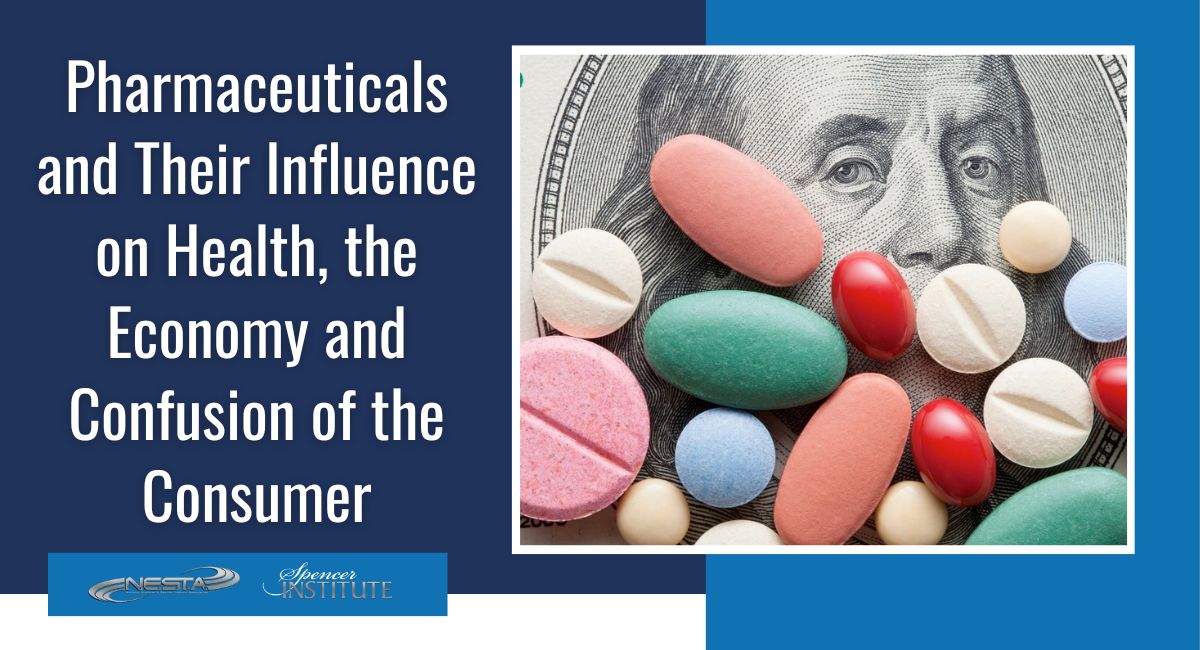
 We probably don’t need to tell you that something has gone wrong in the pharmaceutical industry today. We’ve become a prescriptive/reactive culture. Instead of keeping chronic conditions under control, we live as we want without a realistic view of what it takes to recapture our health once it is compromised. Preventive versus reactive; prescriptive versus proactive. This has made the demand for medication omnipotent, and in case you haven’t noticed, medications are alarmingly expensive. One could argue that universal health coverage handles this, but instead, the cost is distributed amongst everyone. You don’t smoke? Great. But you are more than likely contributing to a fund that manages those who do. You go to the gym most days of the week? Fantastic! Your hard work will help you feel better and keep you from using the resources of these ‘single-pay’ models that cause such intense political debate. In arguing over costs, very few stop to address the root cause. We’re failing at taking our health seriously. Eventually, it becomes time to pay the piper.
Every month a new magic pill emerges, and we are bombarded with commercials for drugs that cite side effects that sound worse than the original ailment. Does this sound familiar? “Warning: may cause nausea, headaches, constipation, dizziness, drowsiness, or in extreme cases death.”
Americans spent $344 billion on prescription drugs in 2018. Pharmaceuticals are ranked No. 3 on the Fortune 500 list of most profitable industries in the country. This explosive growth of prescription drugs is partially due to advertising and doctors guiding the public to believe they need more medication. These advertisements, which usually feature attractive people— sometimes celebrities—smiling in the outdoors, send the message that what people need to be healthy is more prescription drugs. You name the health concern, and a drug is out there for it. Drugs help us control cholesterol, lower blood pressure, regulate the menstrual cycle, prevent osteoporosis, and end acid reflux. While we are not prescription drug-deficient, we are nutritionally deficient. The idea that prescription drugs cure diseases may be a fallacy. They only work as a band-aid to a larger problem.
In addition to inundating the market with drugs and creating advanced marketing strategies, the pharmaceutical industry makes massive profits, charging high prices for their products. In 1980, new legislation allowed university medical researchers and big drug companies to form an alliance. Before that time, taxpayers funded drug research, and findings were available to any pharmaceutical company that wanted to use them. With the new law, universities could patent their discoveries and grant exclusive licenses to drug companies. It was about this time when unbiased research became harder to come by. Congress then later passed another series of laws extending exclusive proprietary rights for brand-name drugs to 14 years, another big win for the pharmaceutical industry. Under this law, pharmaceutical companies could market their drugs without competition for 14 years, charging whatever they liked. Only after the 14-year waiting period could companies sell generic copies of the drug; this law allowed government-granted monopolies in the form of patents and FDA-approved exclusive marketing rights. As profits increased from these new policies, so did the political clout of drug companies.
Drug companies have one of the largest lobbying groups in Washington and give generously to political campaigns. By 1990, the industry had unprecedented control over its fortunes. If it didn’t like something that its regulatory body, the FDA, decreed, it could force change on the policy through direct pressure or friends in Congress.
The pharmaceutical industry led to a transformation in the ethos of medical school. Medical schools began searching for commercial opportunities and now welcome big sponsorships from drug companies. Pharmaceutical sales teams offer presentations to medical students, teaching them about the benefits of their products. Future doctors may have idealistic notions about preventing illness and making Americans healthier, but many of them graduate believing modern drugs are the quickest and most effective way to cure any symptom.
The FDA has the task of approving and regulating not only prescription drugs but also food, supplements, and other products that can be harmful to health.
The mission of the FDA is stated as:
The FDA is responsible for protecting the public health by assuring the safety, efficacy, and security of human and veterinary drugs, biological products, medical devices, our nation’s food supply, cosmetics, and products that emit radiation. The FDA is also responsible for advancing the public health by helping to speed innovations that make medicines and foods more effective, safer, and more affordable; and helping the public get the accurate, science-based information they need to use medicines and foods to improve their health.
What role have universities played in the pharmaceutical arena?
Every year, 2 million Americans become seriously ill from toxic reactions to incorrectly prescribed medicines and the FDA seems unable to manage this efficiently. We assert that the solution is not to simply give people more drugs. We aim instead for a more holistic solution. Maybe we need to be better at understanding disease prevention, the importance of exercise, and how to eat a healthy, balanced diet? The fact that so many are on medication should be questioned, discussed, and addressed.
This information is shared to orient the Certified Holistic Nutrition Coach to the realities of a broken system. We have to understand that even though there may be a pill claiming to help with a particular condition, there is another way — with better side effects. It’s nothing more than a healthy path that involves nutritious food, physical activity, and a fulfilling life.
Don’t Blindly Trust the Experts
With nearly 67,000 members, the American Dietetic Association (ADA) is the nation’s largest organization of food and nutrition professionals. Founded in Cleveland, Ohio, in 1917 by a group of women dedicated to helping the government conserve food and improve the public’s health and nutrition during World War I, the organization’s mission is “leading the future of dietetics.” ADA members serve the public as “the most valued source” of good advice about food and nutrition, with a commitment “to helping people enjoy healthy lives.”
Forty-six states currently have laws concerning professional regulation of dietitians and nutritionists, according to the ADA’s website. The group’s rationale for protecting these titles is simple: the public deserves to know which individuals are qualified by education, experience, and examination to provide nutrition care services. The state of Ohio has a very interesting history with this topic.
The history of these laws began in 1987, when the Ohio state legislature passed a law, creating the Ohio Board of Dietetics, which prevented anyone from advising on nutrition except members of the ADA. This law seems in line with public interest by restricting unqualified people from giving nutritional advice. The Board asserts that only dietitians have permission to use the term “nutritionist” in their job title. Other professionals with master’s degrees or Ph.D.’s in nutrition, who are not members of the ADA, are not allowed to use “nutrition” in their titles in some states (Ohio, for example). In addition, only dietitians can give advice, provide education, and develop policies on nutrition. The Board put the issue into the national agenda, pushing for state-by-state legislation to exclude everyone other than certified dietitians from giving nutritional advice. Are we getting this right, or should we examine things more closely?
A case in point: during a six-year period, beginning in 1996, the board went after 795 people with lawsuits but made a serious tactical error when it turned its guns on Dr. Pamela Popper, a well-known nutritionist with two Ph.D.’s, who had designed an education program for an Ohio hospital but was not a member of the ADA.
The Board came after Popper, threatening criminal prosecution. She not only fought the Board and the ADA but also vigorously campaigned to expose their practices, such as putting qualified professionals out of business, using heavy- handed investigation techniques, prohibiting the public to obtain unbiased nutrition information and failure to show that anyone had been harmed by nutrition advice given by someone who was not a member of the ADA. Popper made people aware that dietetics is only a small part of nutrition theory, and publicized the fact that the ADA is heavily funded by the food industry, receiving millions of dollars a year from agricultural organizations and corporations that manufacture food and food additives.
The ADA’s positions on many health and nutrition subjects are, literally, bought and paid for. “With 15 percent of its budget—more than $3 million—coming from food companies and trade groups, it has learned not to bite the hand that feeds it,” Sheldon Rampton and John Stauber wrote in PR Watch, the quarterly journal of the nonprofit Center for Media and Democracy. The ADA’s website contains a series of fact sheets about various food and health concerns, sponsored by the same corporations that make them. Information on “Balancing Calories and Optimizing Fat” is sponsored by Hellmann’s, maker of the best- selling mayonnaise in the country. Wendy’s sponsors another fact sheet called “What’s a Mom to Do? Healthy Eating Tips for Families.”
“You can’t take $50,000 a year from the sugar association and say bad things about sugar,” Popper writes. “This organization controls the educational programming and registration of thousands of dietitians in the United States. It is my opinion that the influence of industry on the practice of dietitians is one of the reasons why nutrition in institutions such as hospitals, schools, and nursing homes continues to be abominable.”
Global Repercussions of Poor Nutrition, Too Many Pharmaceuticals and Inactivity
People around the world are hungry for American products—movies, television shows, and cigarettes—and they love our food. American fast-food restaurants are sprouting up worldwide. McDonald’s later announced its plan to open 700 new restaurants in China by 2013.
As our eating habits become subject to trends throughout the world, so do our health concerns. In December 2010, the European Commission reported that 50% of European women were obese. Food corporations spend millions of dollars influencing people in developing countries to consume more of these modern foods and abandon their traditional diets.
Overweight people now outnumber undernourished people in the world. The World Health Organization’s estimates agree: globally, there are about 1.5 billion overweight adults, and 500 million of them are obese; in contrast, about 800 million do not have enough to eat. Even Africa, a continent previously thought of as being synonymous with hunger and food scarcity is seeing a drastic rise in obesity and diabetes. More than one-third of African women are now overweight.
Our Truths: A Reality Check
If we want to be healthy, we need to eat nutritious foods. It really isn’t difficult. Unfortunately, billions of dollars are spent every day trying to seduce us not to do it. The food industry, drug companies, politicians, civil servants, and even the medical profession all have strong vested interests in making money and not protecting our health. In one way or another, almost all the sources of information we would expect to support our quest for overall health are contaminated for reasons of financial gain. It almost suggests that being ill and overweight keeps corporate profits healthy.
But the world is beginning to wake up to the reality that healthy food creates healthy people. We see it in the papers, on television commercials and hear all sorts of people talking about it. Sales of organic produce in the U.S. increased from $1 billion in 1990 to $24.8 billion in 2009. Corporations are responding. The success of stores such as Whole Foods and Trader Joe’s and the incorporation of organic sections at Walmart illustrates that consumers are concerned about their health and the quality of their food. When individuals, like you and me, stand up for improving our health, things do change. If we buy our food from health-food stores, farmers’ markets, and don’t spend our money on unhealthful foods, corporations get the message loud and clear. Don’t become a silent victim within the system. Get involved with your local government, your school system, your office, your church or temple, and your family. With our dollars, our voices, and our forks, we have the power to create change. If we all stand up and speak up for what we know to be true, we will dramatically improve the current healthcare system in this country. And when America changes, the world will change.
You can now make a positive difference in educating your clients in the ways of proper nutrition and a holistic lifestyle by completing the following courses:
Spencer Institute Holistic Nutrition Coach Certification
Spencer Institute Master Health and Wellness Coach Certification
NESTA Fitness Nutrition Coach
NESTA Lifestyle and Weight Management Specialist Certification