


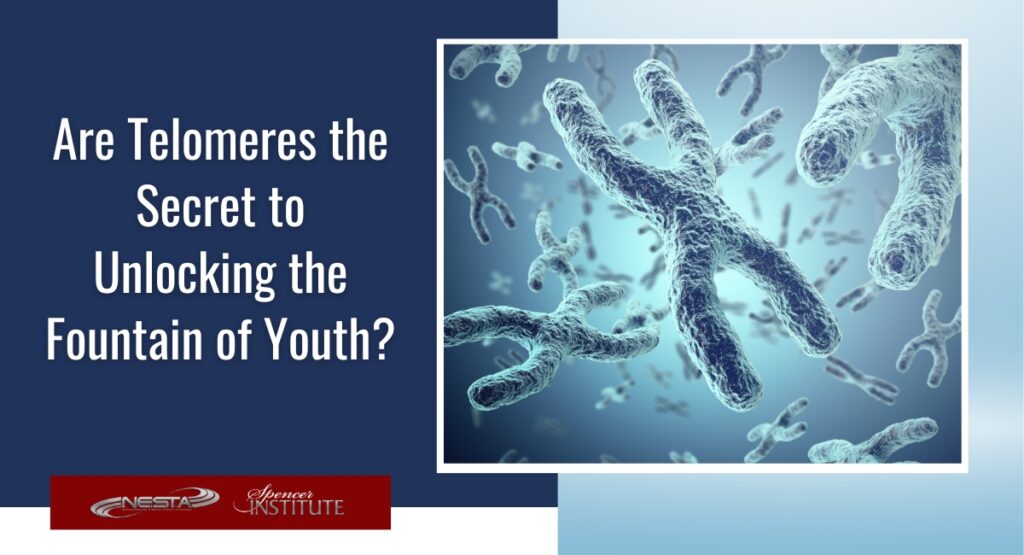

Are Telomeres the Secret to Unlocking the Fountain of Youth? Exploring the Link Between Telomeres, Aging, and Longevity
Telomeres, the protective caps at the ends of our chromosomes, have become a subject of intense scientific interest due to their critical role in cellular aging, cancer development, and potential therapeutic interventions. In this comprehensive lesson, we will delve into the intricate world of telomeres, providing a detailed exploration of their structure, the correlation between telomeres and aging, the remarkable telomerase enzyme, the complex relationship between telomeres and cancer, strategies to slow down telomere shortening, the exciting field of telomere therapeutics, average telomere length by age, the impact of fasting on telomeres, and the emerging link between NAD and telomeres.
If you are a health and fitness professional who is focused on longevity, biohacking and proven strategies to extend human life, you will want to develop an in-depth knowledge of this topic.
Learn how you can earn a professional certification helping clients improve telomere health.
Structure of Telomeres
Telomeres consist of repetitive DNA sequences and specialized proteins that form protective caps at the ends of chromosomes. In humans, telomeric DNA primarily comprises thousands of repeats of the sequence TTAGGG. Telomeric proteins, including shelterin complex proteins, bind to telomeric DNA, providing stability and preventing the recognition of telomeres as damaged DNA.
What is the Correlation Between Telomeres and Aging?
Telomeres play a crucial role in cellular aging. With each cell division, telomeres gradually shorten, eventually leading to cellular senescence or programmed cell death (apoptosis). The progressive shortening of telomeres is associated with aging-related processes and age-related diseases. Numerous studies, including Cawthon et al. (2003) and Fitzpatrick et al. (2007), have demonstrated that shorter telomeres are linked to an increased risk of age-related conditions such as cardiovascular disease, diabetes, and certain cancers.
What Does the Telomerase Enzyme Do?
Telomerase is a specialized enzyme that counteracts the shortening of telomeres by adding repetitive DNA sequences to the ends of chromosomes. It is particularly active during early development and in certain cells, such as stem cells. However, in most somatic cells, telomerase activity is low or undetectable, leading to telomere attrition over time. The groundbreaking research by Greider and Blackburn (1985) and Blasco et al. (1997) unraveled the discovery and mechanism of telomerase, shedding light on its potential for telomere maintenance and cellular longevity.
What is the Connection Between Telomeres Cellular Age and Cancer?
The relationship between telomeres and cancer is complex. While telomeres normally shorten with each cell division, most cancer cells exhibit high telomerase activity, allowing them to maintain telomere length and bypass the cellular aging process. This uncontrolled telomerase activation contributes to the immortality of cancer cells, enabling them to divide indefinitely. Shay and Wright (2001) and Harley et al. (2011) provide key insights into the role of telomeres in cancer development and the potential for telomerase as a target for anticancer therapies.
How Do You Slow Down Telomere Shortening?
Although telomere shortening is a natural part of the aging process, certain lifestyle factors and interventions can influence its rate. Regular exercise, stress reduction techniques such as meditation, a healthy diet rich in antioxidants and omega-3 fatty acids, and sufficient sleep have been associated with longer telomeres. Notably, Ornish et al. (2008) and Epel et al. (2016) have conducted studies revealing the beneficial effects of lifestyle modifications on telomere maintenance.
Telomere Therapeutics
Telomere therapeutics represents an exciting field of research aimed at developing interventions to slow down telomere shortening and potentially reverse age-related telomere attrition. Researchers are exploring various approaches, including telomerase activation, telomere-lengthening gene therapy, and small molecule telomerase inhibitors, as potential strategies for combating age-related diseases and extending healthy lifespan. Bernardes de Jesus and Blasco (2012) and Hayashi et al. (2018) provide valuable insights into the development and potential of telomere therapeutics.
Average Telomere Length by Age
Telomere length varies among individuals and changes throughout the lifespan. Studies have indicated that newborns typically have longer telomeres compared to adults, which progressively shorten with age. The rate of telomere attrition can be influenced by genetic factors, lifestyle choices, and environmental factors. Gardner et al. (2005) and Müezzinler et al. (2013) have conducted research on telomere dynamics across different age groups, providing valuable information on average telomere length by age. Is some additional in-depth reading on the topic of telomere length and the aging process.
How Does Fasting Affect Telomeres?
Fasting, particularly intermittent fasting, has gained attention for its potential benefits on various aspects of health, including telomere length. Animal studies have shown that caloric restriction and intermittent fasting can increase the activity of telomerase and improve telomere maintenance in certain tissues. For example, Anson et al. (2003) conducted a study on rats and found that intermittent fasting led to improved overall health and increased telomere length in various organs. Cheng et al. (2019) conducted a human study and observed that intermittent fasting was associated with longer telomeres and improved metabolic health markers. However, more research is needed to understand the specific mechanisms through which fasting influences telomeres and whether these effects translate to long-term health benefits in humans. Here’s more information about the pros and cons of intermittent fasting.
NAD and Telomeres
NAD (nicotinamide adenine dinucleotide) is a vital molecule involved in cellular energy metabolism and various biological processes. Recent studies have shed light on the link between NAD levels and telomeres. NAD+ is a cofactor required for the activity of enzymes involved in DNA repair and telomere maintenance. Gomes et al. (2013) demonstrated that boosting NAD+ levels in mice through supplementation with nicotinamide mononucleotide (NMN) improved telomere maintenance and cellular health. Zhang et al. (2016) showed that NAD+ levels decline with age, contributing to telomere dysfunction. However, further research is necessary to fully understand the relationship between NAD and telomeres and to explore the potential of NAD+ precursors, such as nicotinamide riboside (NR) and NMN, as telomere-protective agents.
Telomeres stand at the forefront of cellular aging research, unlocking the mysteries of longevity and disease development. Further research and advancements in telomere science hold the promise of extending healthy lifespan and improving overall well-being.
Aside from the Spencer Institute Longevity Coach Certification, another helpful certification to improve your clients’ telomere health is the Holistic Nutrition Coach Certification.
References:
- Blackburn, E. H., Epel, E. S., & Lin, J. (2015). Human telomere biology: A contributory and interactive factor in aging, disease risks, and protection. Science, 350(6265), 1193-1198.
- de Lange, T. (2018). Shelterin-mediated telomere protection. Annual Review of Genetics, 52, 223-247.
- Cawthon, R. M., Smith, K. R., O’Brien, E., Sivatchenko, A., & Kerber, R. A. (2003). Association between telomere length in blood and mortality in people aged 60 years or older. The Lancet, 361(9355), 393-395.
- Fitzpatrick, A. L., Kronmal, R. A., Gardner, J. P., Psaty, B. M., Jenny, N. S., Tracy, R. P., & Kimura, M. (2007). Leukocyte telomere length and cardiovascular disease in the cardiovascular health study. American Journal of Epidemiology, 165(1), 14-21.
- Shay, J. W., & Wright, W. E. (2001). Telomeres and telomerase: three decades of progress. Nature Reviews Genetics, 2(12), 867-879.
- Harley, C. B., Futcher, A. B., & Greider, C. W. (2011). Telomeres shorten during ageing of human fibroblasts. Nature, 345(6274), 458-460.