


The Science of Gas Exchange During Exercise
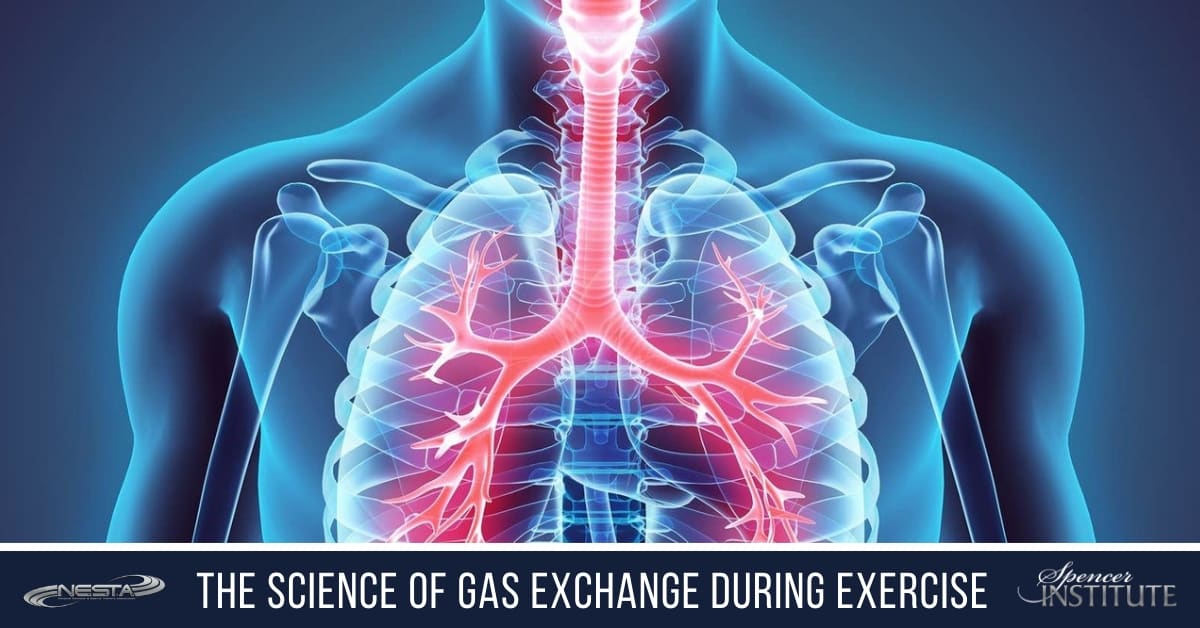
Gas exchange (or respiration) occurs within a dense network of minute blood vessels (pulmonary capillaries) which surround the alveoli. Gas exchange occurs by diffusion (movement from an area of high concentration of a substance to an area of low concentration).
At high altitudes, the partial pressure of oxygen in the atmosphere declines, making it more difficult to get sufficient oxygen to diffuse into the capillaries. The body compensates by increasing the rate of ventilation through hyperventilating, increasing the rate of cellular respiration, and decreasing the capacity to do work. People who live at high altitudes do not have higher ventilation rates, they have greater numbers of alveoli, a higher lung vascularization (better blood flow to and from the lungs), produce more red blood cells or RBCs (which carry more O2 to tissues and CO2 from the cells following tissue breakdown), and have greater levels of hemoglobin (the oxygen-carrying part of the RBCs) with a greater affinity for oxygen.
Why Does Your Breathing Rate Increase During Exercise
During aerobic exercise, both oxygen uptake and carbon dioxide production are increased. Minute ventilation (volume of air breathed per minute) increases by increasing the rate and/or depth of breathing. During exercise, tidal volume (the amount of air inhaled or exhaled in a single breath) can increase to more than 3 times the rate of breathing at rest. Since the respiratory passages (nose, mouth, trachea, bronchi, and bronchioles) are not used for gas exchange these areas are called anatomical dead space. With deeper breathing, tidal volume increases to a greater extent than the anatomical dead space. Because of this dead space, deep, slow breaths allow for greater oxygen utilization.
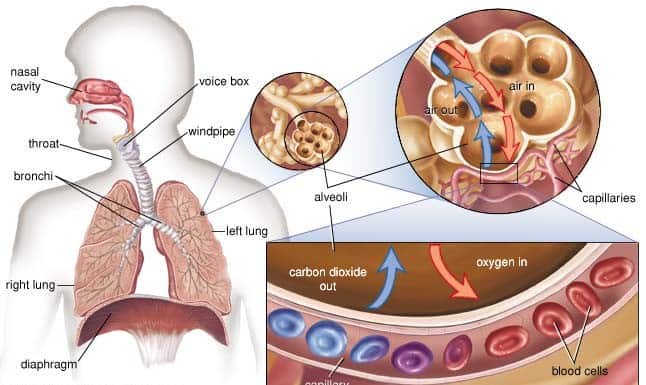
Gas exchange between the alveoli and the pulmonary capillaries occurs across the respiratory membrane. This gas exchange happens through means of diffusion (movement from areas of higher to the lower concentration of a substance). The rate of diffusion follows Fick’s Law (which states that the volume of gas that moves across a tissue is proportional to the area for diffusion and the difference in partial pressure across the membrane, and is inversely proportional to membrane thickness). Gas is circulated through the processes of the pulmonary and systemic circulation.
Pulmonary circulation sends oxygenated blood from the lungs to the heart and then back to the lungs. Pulmonary capillaries are responsible for the exchange of gases. Systemic circulation sends oxygenated blood from the left ventricle through the rest of the body and back to the right atrium where it is then sent back to the lungs.
How Does Our Body Use Oxygen?
The gas that is exchanged across the membrane is not comprised solely of oxygen, but a mixture of gases. This mixture includes oxygen, nitrogen, and carbon dioxide. Nitrogen is the most abundant gas in the air we breathe and comprises 79.04% of the mixture, while oxygen comprises 20.93%, and carbon dioxide 0.03%. Each gas has a partial pressure within this mix of gases. The pressure from each of the individual gases comprises the total gas that is exchanged.
Because nitrogen is not processed by the body, it is not utilized like carbon dioxide and oxygen. With an inhalation, there is a higher percentage of oxygen present in the lungs than carbon dioxide. As the gases travel through the blood, oxygen diffuses into the tissues.
Oxygen is then used by the tissues in order to carry out biological functions. The by-product of these reactions is carbon dioxide. The percentage or concentration of oxygen is less than that of carbon dioxide within the skeletal muscle due to the need and use of oxygen within the muscle.
After gases are used in the muscle, the gases are passed back to the lungs through the blood. The air is then filtered in the lungs and sent back into the body for the process to begin again.
Oxygen is also transported by the blood for use throughout the body. In order for oxygen to be carried efficiently through the body, it attaches to hemoglobin in the RBC’s. Individuals with a high hemoglobin concentration within their blood are more efficient at carrying and distributing oxygen to the tissues in the body.
Starting Your Personal Training Career
Did you know that most fitness careers don’t require formal education or a degree? Learn more about the variety of fitness industry careers.
There is always something exciting about earning anew training or coaching certification and applying that new knowledge of how you train your clients. This also helps you hit the reset button.
NESTA and Spencer Institute coaching programs are open to anyone with a desire to learn and help others. There are no prerequisites.
That’s it for now.
Take action!
PS: Click here to see many helpful business and fitness career resources