


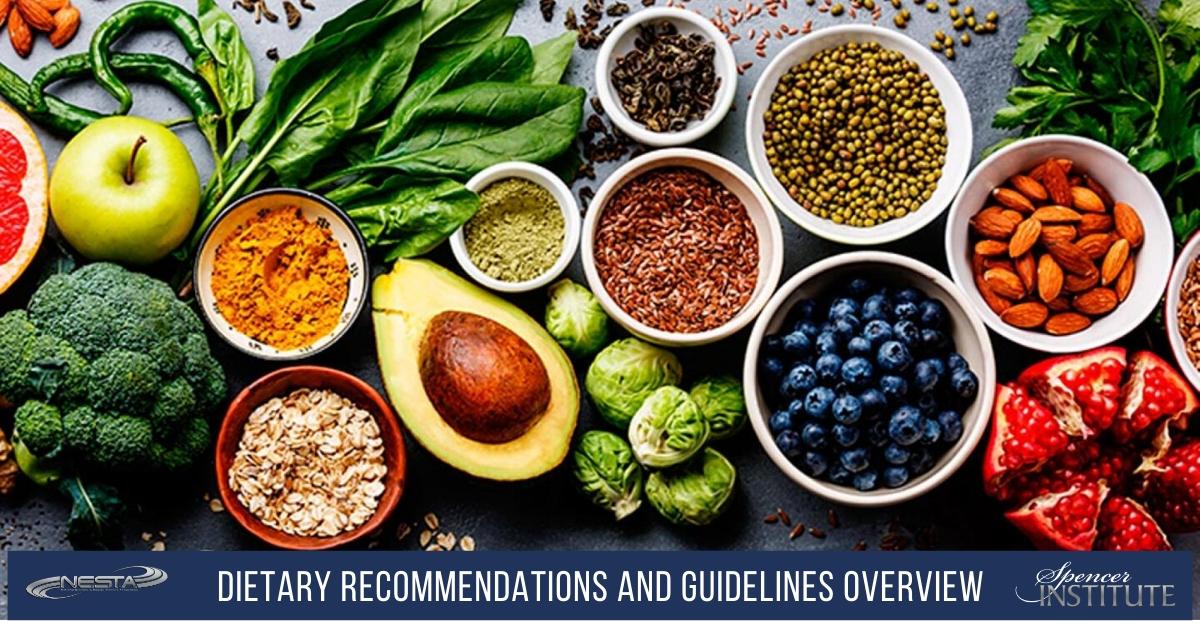
 In the United States, Dietary Guidelines for Americans provide the source for nutrition advice. Published every five years for public health professionals, each edition of the Dietary Guidelines reflects the current body of nutrition science. These recommendations help the general population make healthy food and beverage choices and serve as the foundation for vital nutrition policies and programs across the United States. Keep in mind that these is baseline recommendations and the needs of active clients and athletes will vary.
Guiding Principles for DRIs and Chronic Disease Endpoint
The Joint U.S.-Canadian Dietary Reference Intake (DRI) Working Group is an interesting collaboration, with the National Academies of Sciences,Engineering, and Medicine developing the guiding principles for inclusion of chronic disease endpoints to be used by committees setting future DRIs. The project builds on prior knowledge and is expected to report their findings in the near future.
One item before the group is the guideline for sodium and potassium as DRI’s and the resultant policy recommendations included in the 2017 report. The process will be ongoing, resulting in completely refreshed guidelines in 2020 (every five years).
Research on nutrition identified certain nutrients that are essential for optimal health. Based on this type of research, different organizations and government agencies spanning the globe then develop dietary recommendations so that the population can stay healthy. If you can understand how this relates to the specific foods that you recommend to your client, then you are actively applying this knowledge to your client. It is just one way we service our client, by empowering them with choices.
Fortunately, these recommendations for food intake are also applicable when a coach sets out to design an eating strategy (or “diet”) for active, training clients. Ideally we would also remember that energy and nutrients are found in foods—and learning to select, prepare, and consume nutritious foods can become an enjoyable experience.
When you first work with a client, they may think of food intake as simply “food,” but we want to redirect their focus to understand the nutrients in their food as well.
Essential and non-essential nutrients make up all of the vitamins, acids, fats, and minerals that a living body needs to be healthy. The way we create or obtain the correct amount of each is very different, as well as which particular nutrients fit into which category. To start with a basic explanation, essential nutrients are any nutrients that the body cannot make by itself, or at least not as much as we need. These would be the nutrients the body needs to perform its basic functions. There are many different essential nutrients and many different ways to consume them. There are six basic essential nutrients needed for humans. These are protein, carbohydrates, minerals, fat, vitamins, and water. The body needs all of these for various functions and yet it cannot produce them in adequate amounts. Each of the categories listed above can also then be broken down into more specific nutrients. For example, some include:
Amino Acids: Leucine, Valine, Arginine
Vitamins: A, B6, D, C, B12
Minerals: Iron, Potassium, Calcium, Sodium, Chloride
Luckily, foods that are rich in essential nutrients are plentiful in most parts of the globe. A balanced eating plan is one way we can supplement these essential nutrients for the body. It is also possible to provide your body with all the essential nutrients through vitamin and mineral supplements, but getting these nutrients is always better when they can be sourced from food.
The concept of essential nutrients grew out of speculation that some diseases occurred in populations where dietary recommendations were not followed or even provided. The proof of this theory revealed data on foods that could prevent disease. Nutrients in food that prevent diseases or health problems were then classified as essential nutrients. Nutrients that could be removed from the diet without adverse health effects were classified as nonessential nutrients. Here is where it can become a little confusing, because a nutrient can be physiologically essential but classified as nonessential if the nutrient can be naturally made (synthesized).
Although all nutrients are important for growth and good health, they do not all have to come strictly from the diet. To be able to classify a nutrient as essential requires careful scientific examination. By the middle of the 20th century, several nutrients were known to be essential. Even though the science of human nutrition has advanced greatly since then, classifying nutrients as either essential or nonessential has been difficult. The resulting definition is as follows: a nutrient is considered essential if its removal from the diet results in signs and/or symptoms of a deficiency and disease – and if these signs can be prevented only by the nutrient itself or by a precursor to the nutrient.
You have choices for nutrition education and certifications:
NESTA Lifestyle and Weight Management Specialist Certification
NESTA Sports Nutrition Specialist Certification
NESTA Fitness Nutrition Coach Certification