

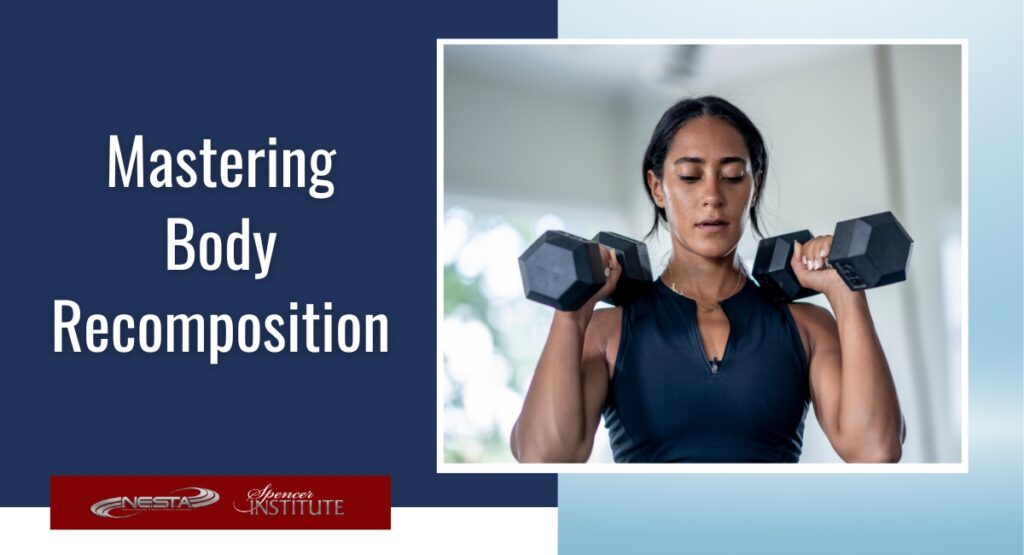

Mastering Body Recomposition: A Comprehensive Guide for Personal Trainers
Body recomposition, a nuanced approach to transforming one’s physique, has gained significant traction in the realm of fitness and nutrition. This method involves simultaneously reducing body fat while building or preserving lean muscle mass. Unlike the conventional strategies of bulking and cutting, which involve distinct phases of caloric surplus and deficit, body recomposition strives to optimize body composition in a more balanced and sustainable manner.
As a NESTA Certified Personal Trainer, you should possess a strong understanding of body recomposition. This knowledge allows you to provide comprehensive guidance that goes beyond conventional methods like bulking and cutting. Instead, you can tailor your advice to suit each client’s unique goals and preferences, leading to more effective training programs.
Principles of Body Recomposition
Body recomposition rests on the principle of manipulating macronutrients, exercise routines, and recovery to elicit a specific physiological response. The central tenet involves consuming slightly more calories than expended while engaging in resistance training to encourage muscle development and fat loss. The concept of maintaining a modest caloric surplus is crucial for facilitating muscle growth, as this provides the necessary nutrients for repair and growth without excessive fat gain. Simultaneously, controlled caloric intake ensures that body fat is gradually reduced.
How is Body Recomposition Different From Traditional Cutting and Bulking?
A stark contrast exists between body recomposition and the traditional methods of cutting and bulking. Cutting entails a caloric deficit to shed body fat, often leading to muscle loss in the process. Conversely, bulking involves a caloric surplus to maximize muscle gain, but it inevitably leads to some fat accumulation. Body recomposition bridges this gap by seeking a middle ground, aiming to optimize both muscle growth and fat loss without the extreme fluctuations in body weight. This approach is especially beneficial for those who prioritize maintaining a lean physique while gradually building muscle.
Why Personal Trainers Should Have a Solid Understanding of Body Recomposition
By grasping the concept of body recomposition, trainers can create individualized plans that consider clients’ desires to simultaneously build muscle and reduce fat. This personalized approach fosters motivation and adherence, as clients see the program aligning closely with their objectives. Furthermore, this approach promotes gradual, consistent progress, ensuring long-term sustainable results while avoiding extreme weight or muscle fluctuations that could be detrimental to clients’ well-being.
Understanding body recomposition showcases a trainer’s appreciation for the holistic nature of health and fitness. They can educate clients about balanced nutrition, proper recovery, and regular exercise, contributing to an overall approach to well-being. This knowledge also enhances the client-coach relationship, as clients trust in the trainer’s expertise and guidance.
Staying informed about body recomposition and other evolving practices in the fitness industry demonstrates a commitment to professional development. Trainers who possess this knowledge remain competitive and capable of offering evidence-based strategies to clients, enabling them to navigate through myths and misconceptions that might otherwise hinder their progress.
Initiating Body Recomposition for Beginners
For beginners, embarking on a body recomposition journey requires a well-structured plan to ensure safety and effectiveness:
- Setting Clear Goals: Define realistic and achievable goals that align with your individual aspirations and lifestyle. This could involve specifying the percentage of body fat to lose or the amount of muscle to gain.
- Balanced Nutrition: Focus on a balanced macronutrient intake comprising lean proteins, complex carbohydrates, and healthy fats. Ensure a moderate caloric surplus that supports muscle growth without excessive fat accumulation.
- Structured Training Program: Incorporate a well-designed resistance training regimen that targets all major muscle groups. Progressive overload—gradually increasing the weights or resistance—stimulates muscle growth.
- Cardiovascular Activity: Include regular cardiovascular exercises to support fat loss and cardiovascular health. High-intensity interval training (HIIT) can be particularly effective in this regard.
- Adequate Rest and Recovery: Prioritize sleep and recovery to allow muscles to repair and grow. Overtraining can hinder progress and increase the risk of injuries.
- Consistent Monitoring and Adjustments: Regularly assess your progress through measurements, photos, and performance metrics. Adjust your nutrition and training plan as needed to stay on track.
By following these principles and practices, individuals can embark on their journey towards body recomposition safely and effectively, transforming not only their physical appearance but also their overall well-being.
Resources for Trainers and Coaches
A strong understanding of body recomposition empowers personal trainers to offer comprehensive guidance, tailor programs to individual goals, promote sustainable results, foster trust with clients, stay current in the industry, address misconceptions, and cater to diverse aspirations. This knowledge equips trainers to be effective partners in helping clients achieve desired body composition changes while prioritizing long-term health and wellness.
If you have yet to earn your professional credentials, this is critical. You need it for the safety of your client, your professional standing in the fitness industry, and liability reduction. Start with the NCCA-accredited NESTA Personal Fitness Trainer Certification.
Additionally, the Figure & Physique Training Specialist program will give you everything you need to coach and train clients who want to compete on stage, or just have the body of a competitor. This is perfect for weight loss/fat loss services as well.
Learn more about the variety of fitness industry careers. There is always something exciting about earning a new training or coaching certification and applying that new knowledge of how you train your clients.